Construction and demolition roll-off containers isolate rough, dense structural refuse that city curbside collections and ordinary residential bins reject. When managing a kitchen tear-out in Plaza Midwood or a…
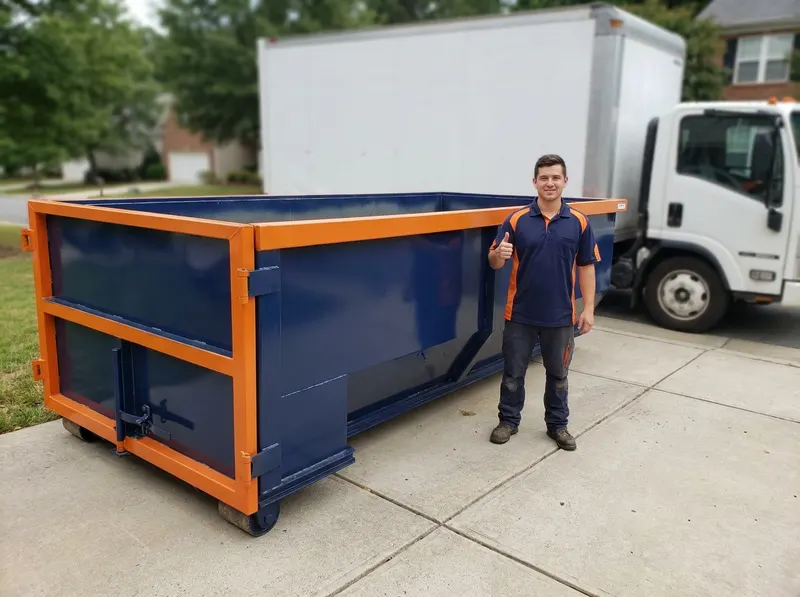
Construction and demolition roll-off containers isolate rough, dense structural refuse that city curbside collections and ordinary residential bins reject. When managing a kitchen tear-out in Plaza Midwood or a multi-room renovation along Queens Road in Myers Park, trade crews require dedicated containment to keep access lanes open and avoid billable downtime. A roll-off container differs from standard junk hauling because the bin remains anchored on-site for the duration of the framing or demolition phase, allowing continuous debris staging rather than forcing workers to assemble loose piles on lawns. Every delivery employs protective wooden blocking placed beneath steel wheels and ground contact points, preventing surface cracking or scuffs on asphalt, paver, and stamped concrete surfaces in residential corridors like Dilworth and Cotswold.
Selecting the proper container dimensions depends on material weight versus volume. Dense materials like ceramic tile, mortar, plaster, and roofing bundles reach legal hauling limits much faster than lightweight items. A 10-yard container holds approximately 4 standard pickup truck beds of dense waste, making it the practical choice for single-room bathroom demolitions or brick walkway removals where ground load must stay compact. For full structural gut jobs, roof replacements, or commercial tenant upfits near South End and University City, larger 30-yard and 40-yard units hold 12 to 16 pickup loads, managing dimensional framing studs, drywall sheets, and bulky siding without debris rising above the container rim.
Placement logistics require firm planning before drop-off day. Standard roll-off haulers require approximately 60 feet of straight approach space and 14 feet of overhead clearance, clear of low-hanging tree branches and utility drops. Private driveways throughout Elizabeth and NoDa eliminate the need for municipal street occupancy permits, provided the roll-off does not encroach on public sidewalks or right-of-way zones. Mecklenburg County landfill regulations strictly prohibit hazardous wastes, including wet paint, liquid adhesives, solvents, asbestos-containing materials, and commercial chemicals; these items must be separated prior to haul-away to ensure compliance with county transfer station intake standards.
Every job gets a firm, written price after a free on-site visit.
Tell us about your construction & c&d dumpsters job in Charlotte and we'll send a clear, written quote, usually the same day.
 Falcon Ridge Dumpster Rental