Roof tear-offs generate high-density, compact waste that behaves differently than general household trash. A single roofing square (100 square feet) of standard 3-tab asphalt shingles weighs roughly 250 pounds, while…
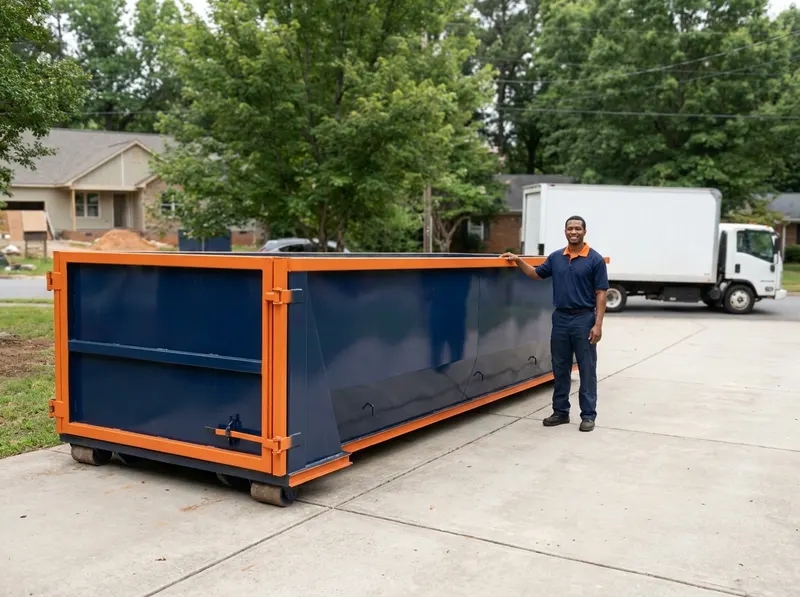
Roof tear-offs generate high-density, compact waste that behaves differently than general household trash. A single roofing square (100 square feet) of standard 3-tab asphalt shingles weighs roughly 250 pounds, while modern architectural shingles weigh up to 450 pounds per square. On a 30-square residential reroof in Cotswold or Ballantyne, the tear-off easily generates over 4 tons of shingles, nails, underlayment, and scrap decking. Choosing a 10-yard roll-off fits projects under 25 squares of architectural shingles, whereas a 20-yard container fits up to 50 squares; larger 30-yard or 40-yard units are deployed for multi-layer removals on expansive Myers Park rooflines or steep pitches requiring extensive plywood replacement. The operational trade-off centers on driveway clearance versus disposal capacity: large roll-offs demand up to 60 feet of direct straight-line clearance for hydraulic roll-off trucks, which requires careful staging along tree-lined curbs in Dilworth or Elizabeth.
Placement protocols prevent surface damage to asphalt, pavers, and stamped concrete. Heavy roll-off steel wheels can gouge residential driveways under a 5-ton load; heavy protective wood blocking is placed directly beneath the contact points before the bin touches the ground. In tight urban corridors such as South End, Plaza Midwood, or NoDa, narrow private driveways require positioning the container close to the garage apron or coordinating off-street placement to maintain sidewalk right-of-way. In University City, long standard concrete drives allow full container centering beneath the roof eaves, speeding up shingle pitch directly from the edge of the roof and eliminating secondary ground handling.
Booking operates through three concrete steps: 1. Confirm square footage, layers being stripped, and delivery timing with dispatch by phone. 2. A designated drop area is secured with protective lumber barriers prior to unloading the container. 3. Shingles and tear-off debris are loaded flush to the top rail, and the container is scheduled for transport to regional Mecklenburg waste processing facilities upon project completion.
Every job gets a firm, written price after a free on-site visit.
Tell us about your roofing debris dumpsters job in Charlotte and we'll send a clear, written quote, usually the same day.
 Falcon Ridge Dumpster Rental